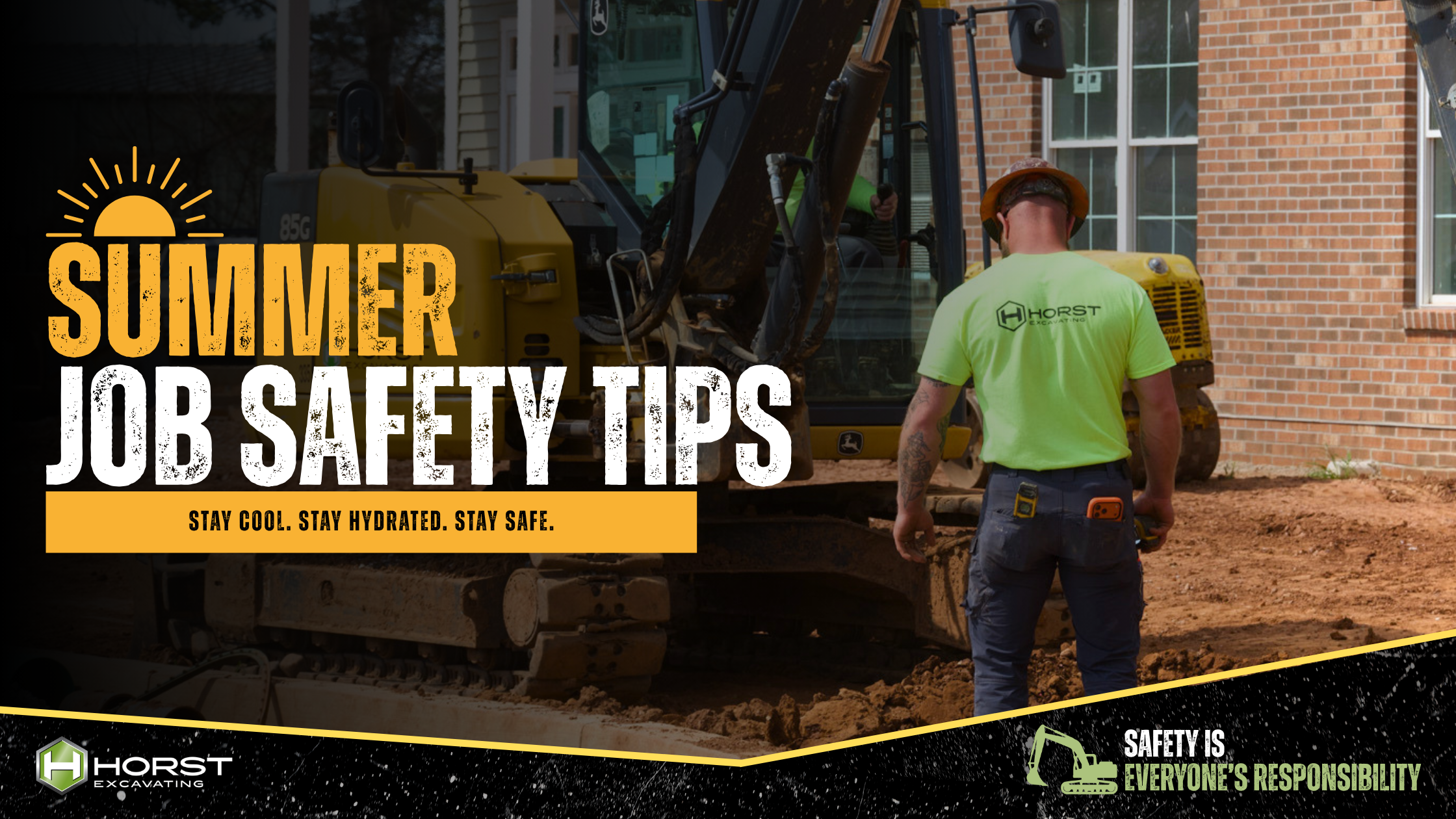
Summer is one of the busiest times of year for excavation and site work. Longer days and warmer weather help keep projects moving, but they also introduce serious safety risks that shouldn't be overlooked.
Working through the summer heat is part of the job, but staying safe starts with making smart decisions before the temperature takes its toll. Heat-related illnesses can develop quickly, often before someone realizes they're in danger. A few simple habits each day can help protect both people and equipment, allowing everyone to work safely and efficiently.
Excavation work is physically demanding. Add high temperatures, humidity, direct sunlight, and heavy personal protective equipment (PPE), and the body has to work much harder to stay cool.
Without proper precautions, workers may experience:
Heat also affects equipment. Hydraulic systems, engines, tires, and cooling systems all operate under greater stress during hot weather, making daily inspections even more important.
One of the biggest misconceptions about hydration is waiting until you feel thirsty. Thirst is actually one of the first signs that your body is already becoming dehydrated.
Throughout the workday:
Proper hydration helps regulate body temperature, reduces strain on the heart, and improves both physical and mental performance.
Heat doesn't only come from the air temperature. Direct sunlight and radiant heat from equipment, pavement, and soil can significantly increase your body's temperature.
To reduce your risk:
Even small steps can help reduce the risk of heat-related illness while protecting your skin during long hours outdoors.
Breaks aren't just part of the schedule. They're an important safety tool.
Whenever possible:
Giving your body time to recover helps maintain focus, improves decision-making, and reduces the likelihood of mistakes caused by fatigue.
Summer heat doesn't only affect workers. It also places additional stress on heavy equipment.
Daily inspections become even more important during hot weather because high temperatures can contribute to:
Identifying small issues before work begins helps prevent unexpected downtime while keeping operators and crews safer throughout the day.
Heat-related illnesses often develop gradually, making it important to look out for yourself and those around you.
Common warning signs include:
If someone begins showing signs of heat exhaustion, they should move to a cooler location, drink water if they are alert, and be monitored closely.
If symptoms become severe, especially confusion, loss of consciousness, or a body temperature above 104°F, it may be heat stroke. Heat stroke is a medical emergency. Call 911 immediately and begin cooling the person while waiting for emergency responders.
One of the most effective ways to prevent heat-related illnesses on a construction or excavation job site is by watching out for your crew.
The problem is that someone experiencing heat stress may not realize how serious their condition has become. That's why coworkers are often the first to notice when something isn't right.
If someone seems unusually tired, starts making simple mistakes, appears confused, stops sweating, or isn't acting like themselves, don't ignore it. Speak up. Encourage them to stop working, move to a cooler area, and get help if needed. A simple conversation could prevent a serious medical emergency.
At Horst Excavating, job site safety is built on teamwork. Whether you're operating heavy equipment, working in a trench, or supporting the crew on the ground, everyone has a role in helping prevent heat-related illnesses. Looking out for yourself is important, but looking out for each other is what makes every job site safer.
The best way to treat heat stress is to prevent it before it starts. Staying hydrated, taking breaks, protecting yourself from the sun, and recognizing the warning signs early can help ensure every member of the crew finishes the day safely.
At Horst Excavating, safety isn't something we think about only during the hottest days of summer. It's built into every project, every inspection, and every decision we make.
By staying hydrated, protecting yourself from the sun, taking breaks, inspecting equipment, and recognizing the signs of heat stress, we can help ensure everyone goes home safely at the end of the day.
Because the most important thing we build isn't just the project. It's a culture where people look out for one another.
For more information on preventing heat-related illnesses and staying safe on the job, these organizations provide excellent guidance: